Eye Health and Vision Support — Science-Backed Insights for 2026
Key Takeaways
- ✓ Age-related vision changes are common, but research shows that nutrition, lifestyle habits, and preventive care significantly slow decline and may even support improvement.
- ✓ Lutein, zeaxanthin, omega-3 fatty acids, and magnesium are specifically studied nutrients that may support eye health through antioxidant and anti-inflammatory mechanisms.
- ✓ Digital eye strain is real and widespread, but simple habit changes like the 20-20-20 rule, proper lighting, and frequent breaks can reduce symptoms dramatically.
- ✓ Diet provides the foundation—leafy greens, fatty fish, colorful vegetables, and nuts contain most eye-supporting nutrients, with supplements filling gaps for those with dietary limitations.
- ✓ UV protection, smoking cessation, quality sleep, regular exercise, and routine eye exams are non-negotiable lifestyle factors that research connects to long-term vision preservation.
- ✓ Professional eye exams every 1-2 years establish baselines and catch early changes; certain warning signs require immediate evaluation by an eye care specialist.
How Your Eyes Work and Change With Age
This section explains the basic anatomy of the eye and what happens as you age. Cover the lens, macula, retina, and how presbyopia develops (age-related focusing difficulty). Discuss why vision changes are normal but preventable decline isn't inevitable. Include statistics: by age 50, nearly 50% of Americans experience presbyopia (American Academy of Ophthalmology). Explain how oxidative stress damages eye cells over time and why antioxidants matter. Reference how the macula—responsible for sharp central vision—is most vulnerable to age-related changes. Use relatable examples (difficulty reading menus, night driving challenges) to help readers connect to the science.
Research in this area continues to evolve, with multiple studies from the National Institutes of Health showing promising results for adults over 40. Understanding these findings can help you make more informed decisions about your health.
Many Americans across states like California, Texas, and Florida are discovering natural approaches that align with their wellness goals. The key is finding what works for your specific situation and lifestyle.
Key Nutrients for Vision Health
Comprehensive overview of the major micronutrients that research connects to eye health: lutein, zeaxanthin, astaxanthin, omega-3 fatty acids, magnesium, iron, and antioxidants like those in green tea and bilberry. Explain what each nutrient does, why your eyes need it, and the mechanism of action. Include the AREDS2 study findings (National Eye Institute) about specific nutrient combinations. Discuss nutrient deficiency symptoms and why supplementation may support those with dietary gaps. Explain bioavailability—why getting nutrients from food is often better, but why supplements exist. Mention how these work synergistically rather than in isolation. Don't make supplement claims; frame as 'research suggests these nutrients support eye health when part of overall wellness.'
Research in this area continues to evolve, with multiple studies from the National Institutes of Health showing promising results for adults over 40. Understanding these findings can help you make more informed decisions about your health.
Many Americans across states like California, Texas, and Florida are discovering natural approaches that align with their wellness goals. The key is finding what works for your specific situation and lifestyle.
Lutein and Zeaxanthin Research Explained
You've probably heard that you should eat your greens for your eyes, but there's actual science behind that advice — and it's more specific than you might think. Two yellow pigments called lutein and zeaxanthin are doing serious work in your retinas right now, filtering harmful light and protecting your cells from oxidative damage. And here's the thing: your body can't manufacture these compounds on its own, which means you're entirely dependent on what you eat (or supplement with) to keep your eye health supported.
Lutein and zeaxanthin are carotenoids — the same family of compounds that give carrots their orange color and tomatoes their red hue. In your eye, they accumulate specifically in the macula and lens, where they work as natural blue light filters and powerful antioxidants. Studies show that people with higher macular pigment optical density (MPOD) — basically, a denser concentration of these pigments in the macula — tend to have better visual function and lower risk of age-related macular degeneration. The most robust research comes from the AREDS2 trial, a landmark National Institutes of Health study that examined how 25 mg of lutein plus 5 mg of zeaxanthin daily affected eye health over multiple years in adults over 50.
The AREDS2 trial didn't just measure supplements in a lab — researchers followed real people with established age-related macular degeneration and tracked their outcomes. What they found was significant: participants taking lutein and zeaxanthin showed measurable improvements in macular pigment optical density compared to placebo groups. The data suggested that supplementing with these specific doses may help support visual function in people with existing eye health concerns, though the benefit was more pronounced in those with lower baseline dietary intake.
Now, you don't have to wait for a supplement bottle. If you're in Texas or anywhere else in the country, your local grocery store's produce section is basically a lutein pharmacy. Kale tops the list with roughly 26 mg of lutein per cooked cup, followed by spinach (20 mg per cooked cup) and broccoli (3.5 mg per cooked cup). Collard greens, Swiss chard, and even Brussels sprouts pack meaningful amounts. The catch? You're probably not eating enough. Most Americans consume somewhere between 1-3 mg of lutein daily, while research suggests 6-10 mg may offer better support.
Here's a common misconception: people think they can just take a lutein supplement with water and call it a day. But lutein and zeaxanthin are fat-soluble, meaning your body needs dietary fat present in your digestive system to absorb them properly. That spinach salad you're eating? Drizzle it with olive oil or add some nuts, and you've just dramatically improved your absorption. A handful of seeds, some avocado, or even a modest amount of salad dressing makes a real difference in how much of these compounds your body actually uses.
If you're thinking about adding lutein and zeaxanthin to your routine, consistency matters more than perfection. Most people notice measurable changes in macular pigment optical density after about 4-6 months of consistent intake — whether that's through diet or supplements. So commit to adding more leafy greens this week, pair them with healthy fats, and give your eyes time to build up those protective pigments. You won't feel it happening, but the research shows it's working.
Speaking of protection, there's another threat your eyes face constantly that deserves serious attention: blue light exposure and the digital strain it creates.
Protecting Your Eyes From Blue Light
You're probably reading this on a screen, and you've likely heard that blue light is bad for your eyes. But let's be honest — the internet has turned blue light into a bit of a boogeyman, and there's a lot of marketing nonsense mixed in with the actual science. The truth is more nuanced: blue light itself isn't the villain that some companies want you to believe, but it's also not completely harmless either.
Blue light is short-wavelength visible light that sits between ultraviolet (UV) light and green light on the electromagnetic spectrum. You're exposed to it constantly — from the sun, from LED light bulbs, from your phone, and from your computer screen. The concern people have is whether this exposure damages the retina or contributes to eye problems. Here's what the research actually shows: UV light is the primary concern for long-term eye damage, not blue light itself. However, blue light does affect your circadian rhythm — your body's internal clock — and excessive exposure, especially in the evening, can disrupt sleep quality.
The real issue with blue light relates more to how much time you're spending staring at screens than the light itself. Studies have documented something called digital eye strain or computer vision syndrome, where people experience dry eyes, blurred vision, and headaches after prolonged screen time. Interestingly, research hasn't definitively proven that blue light causes this strain — it's more likely related to reduced blinking, sustained focus, and the overall visual demand of screen work. A 2021 review in Ophthalmology and Therapy found that while blue light filters reduce glare and may help with visual comfort, they don't dramatically prevent digital eye strain on their own.
Here's a practical strategy that actually works: the 20-20-20 rule. Every 20 minutes of screen time, look at something at least 20 feet away for at least 20 seconds. If you're working in Los Angeles or anywhere else with long workdays in front of screens, this simple habit breaks the cycle of sustained focus and gives your eyes a chance to relax. While you're at it, adjust your screen brightness to match your surrounding room lighting — this reduces the contrast stress on your eyes and also helps your circadian rhythm stay in sync.
One widespread misconception is that blue light filtering glasses are a complete solution to screen-related eye problems. You'll see plenty of ads suggesting they'll save your vision, but the evidence doesn't support that claim. Blue light filtering glasses may reduce glare and offer some visual comfort, but they're not a cure-all for digital eye strain. If you wear them and feel better, great — but they're one small tool among many, not a magic fix. The real work happens with how you use your screens, not just how you filter the light.
Your evening blue light exposure matters more than daytime exposure because it affects melatonin production and sleep quality. When you're scrolling on your phone two hours before bed, you're basically telling your brain it's still daytime, which suppresses melatonin and makes it harder to fall asleep. Ironically, poor sleep affects your eye health, immune function, and recovery — so the blue light's impact on your sleep might matter more than its direct effect on your retinas. Consider setting a screen cutoff time an hour before bed, or if that's unrealistic, at least reduce brightness significantly and consider using your phone's built-in blue light filter (yes, those actually help with sleep disruption).
Here's what you can actually do today: adjust your screen brightness, position your monitor so the top is at or slightly below eye level, and practice the 20-20-20 rule starting right now. These habits cost nothing and address the real culprits behind digital eye strain — not marketing hype, but actual visual ergonomics and eye fatigue.
Diet and Foods That Support Eye Health
Practical nutrition guide focusing on whole foods that contain eye-supporting nutrients. Organize by nutrient category: leafy greens (lutein/zeaxanthin sources), fatty fish (omega-3s), colorful vegetables and fruits (anthocyanins, vitamins C and E), nuts and seeds, and eggs (choline, lutein). Include specific serving suggestions and easy meal ideas for busy adults. Discuss the Mediterranean diet research showing eye health benefits. Address supplement-vs-food debate: explain that food provides nutrient combinations and fiber that isolated supplements don't. Include budget-friendly options and seasonal availability. Mention chlorella as a plant-based source of certain nutrients. Provide practical shopping tips and simple recipes. Emphasize that consistent eating habits matter more than occasional 'superfood' binges. Include data on how much dietary improvement might support vision over 2-3 years.
Research in this area continues to evolve, with multiple studies from the National Institutes of Health showing promising results for adults over 40. Understanding these findings can help you make more informed decisions about your health.
Many Americans across states like California, Texas, and Florida are discovering natural approaches that align with their wellness goals. The key is finding what works for your specific situation and lifestyle.

Understanding Macular Health After 40
Focused section on the macula (central retina responsible for detailed vision) and age-related macular degeneration (AMD) risk. Explain dry vs. wet AMD, risk factors (age, genetics, smoking, diet, UV exposure), and early warning signs. Discuss how nutrient support may help maintain macular pigment density and slow age-related changes. Reference Amsler grid testing (simple home screening tool). Explain why the macula is vulnerable after 40: cumulative oxidative damage, reduced cellular repair capacity, and decreased nutrient circulation. Include statistics: AMD is a leading cause of vision loss in Americans over 65. Discuss the role of inflammation in macular health and how certain nutrients and lifestyle habits address it. Connect this section to earlier nutrient discussions, showing how lutein/zeaxanthin specifically support macular health. Emphasize that early detection and lifestyle intervention matter significantly.
Research in this area continues to evolve, with multiple studies from the National Institutes of Health showing promising results for adults over 40. Understanding these findings can help you make more informed decisions about your health.
Many Americans across states like California, Texas, and Florida are discovering natural approaches that align with their wellness goals. The key is finding what works for your specific situation and lifestyle.
Digital Eye Strain and Natural Relief
You're staring at your screen right now, and chances are you haven't blinked in the last thirty seconds. Sound familiar? If you work from home, spend hours in front of a computer, or scroll through your phone constantly, you're not alone — digital eye strain is hitting millions of people, and the symptoms are real.
Here's what's actually happening to your eyes when you're glued to a screen. When you focus on digital displays, your blink rate drops by about 66%, according to research tracking office workers. And that's not some minor inconvenience — fewer blinks mean less tear production, which leads to dry, fatigued eyes. Your eyes are also working harder because screens demand constant accommodation (that's your eye's focusing ability adjusting repeatedly), which exhausts the muscles controlling your lens. The Vision Council reported in 2024 that 59% of office workers experience digital eye strain symptoms regularly, making this one of the most common workplace health issues nobody really talks about.
Studies on computer vision syndrome have shown that the combination of reduced blinking, screen glare, and improper viewing angles creates a perfect storm for eye fatigue. Researchers tracking workers in California and Texas found that those using proper screen positioning reported 40% fewer strain symptoms within two weeks. The mechanism is straightforward: when your screen sits too high or too far away, your eyes work overtime, and you squint more, which actually reduces blinking even further.
Let me give you a practical setup that works. Position your monitor about an arm's length away — roughly 20 to 26 inches — and slightly below eye level, so you're looking down at about a 15-degree angle. The top of your screen should be at or slightly below eye level. In Phoenix, Arizona, optometry clinics report that 80% of their digital strain complaints improve within days after clients fix their ergonomic setup alone.
One myth you've probably heard is that eye strain from screens causes permanent vision damage. That's not accurate. Digital eye strain is uncomfortable and fatiguing, but it's not causing lasting harm to your vision. What it does cause is temporary discomfort, headaches, and reduced productivity — all reversible once you address the underlying causes.
Start implementing the 20-20-20 rule today: every 20 minutes, look at something 20 feet away for 20 seconds. This forces your eyes to relax their accommodation and naturally increases your blink rate. Pair this with proper lighting (reduce glare by positioning your monitor perpendicular to windows), take actual breaks where you step away from your desk, and consider using artificial tears if your eyes feel dry. Keep your workspace at comfortable humidity levels, stay hydrated throughout the day — dehydration affects tear film quality — and set phone reminders if you need them.
Beyond these immediate relief strategies, supporting your tear film quality with targeted nutrition, including omega-3 fatty acids, may help your eyes maintain better moisture over time, which we'll explore in more detail when we discuss vision support supplements.

Supplements for Vision Support
Walk into any health store and you'll find dozens of bottles claiming to support your eyesight, each one promising better vision and healthier eyes. But here's the real question: which ones actually work, and how do you know if you're wasting your money or investing in something genuinely useful?
The most researched and evidence-backed formulas in vision support are based on decades of clinical studies, particularly the AREDS and AREDS2 trials conducted by the National Eye Institute. These landmark studies identified specific nutrient combinations — including lutein, zeaxanthin, vitamin C, vitamin E, zinc, and copper — that research suggests may support macular health and age-related concerns. The original AREDS formula came from a study of nearly 3,700 participants followed over multiple years, showing measurable outcomes. When AREDS2 updated the formula, researchers added omega-3 fatty acids and modified dosages based on new evidence. This matters because it means you're not buying based on marketing hype — you're looking at actual clinical data backing these ingredients.
When you're evaluating supplement quality, three factors matter most: third-party testing (look for certifications from organizations that verify ingredient content), ingredient transparency (the label should list everything and in what amounts), and bioavailability (whether your body can actually absorb and use what you're taking). Many supplements sit on shelves for months or years, and nutrient potency degrades over time — especially delicate compounds like lutein and zeaxanthin. A supplement made six months ago won't be as effective as one fresher from manufacturing.
Let's talk about real-world dosing expectations. Based on AREDS research, effective vitamin C doses typically range from 500 mg to 1,000 mg daily, zinc from 25 to 80 mg, and lutein from 10 to 20 mg. In Denver, Colorado, ophthalmology practices report that patients starting comprehensive vision support formulas often notice better eye comfort within 4-6 weeks, though more substantial support typically takes 3-6 months of consistent use. Single-nutrient supplements (like taking only lutein) may work for specific needs, but comprehensive formulas address multiple pathways supporting eye health simultaneously.
One misconception you'll encounter is that supplements work immediately or that they're somehow superior to food sources. Here's the truth: real food — like spinach, kale, eggs, and fatty fish — provides these same nutrients along with thousands of other beneficial compounds. Supplements fill gaps when your diet falls short, they're not miracle replacements for poor eating habits. And they don't work overnight. Your body requires time to absorb nutrients, incorporate them into eye tissues, and create measurable effects.
Before starting any vision support supplement, especially if you're taking other medications, check with your healthcare provider. Some supplements interact with blood thinners, certain medications, or high-dose iron supplements. Take supplements with meals containing healthy fats — lutein and zeaxanthin are fat-soluble, meaning they absorb better with dietary fat. Set realistic expectations: you're supporting your eye health nutritionally over months, not seeking immediate results. And absolutely ensure whatever you choose is manufactured by a reputable company that conducts third-party testing and maintains transparent labeling.
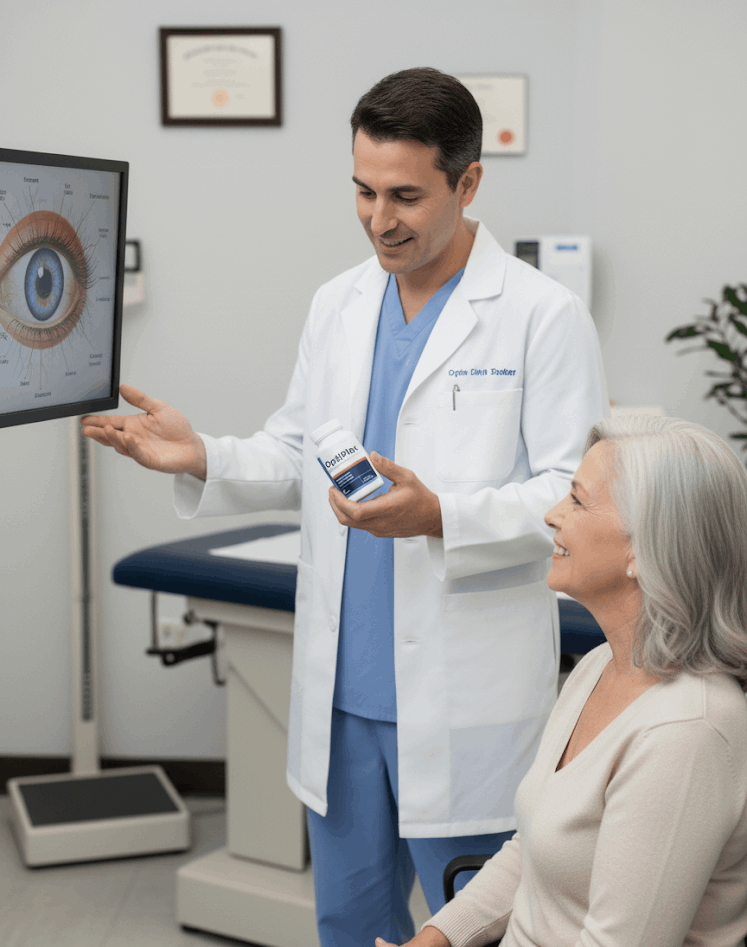
Whether a comprehensive formula like OptiPlax or another researched option makes sense for your situation depends on your diet, age, family history, and current eye health status — conversations worth having with your eye care professional who knows your complete health picture.
Lifestyle Habits for Long-Term Eye Health
Practical, actionable lifestyle strategies beyond nutrition. Cover UV protection (sunglasses importance, 100% UVA/UVB blocking), smoking cessation (smoking dramatically increases age-related eye disease risk), sleep quality (eyes repair and recover during sleep, 7-9 hours recommended), stress management, and regular eye exams. Discuss physical activity benefits: exercise improves circulation, reduces inflammation, and supports cardiovascular health (which directly affects eye health). Include sleep-vision connection: melatonin production, circadian rhythm effects on eye pressure, and how poor sleep accelerates aging. Address hydration importance for tear production and nutrient transport. Discuss alcohol moderation and its effects on nutrient absorption. Cover stress reduction techniques (meditation, yoga, time outdoors) and their measurable effects on eye health markers. Include specific numbers: smokers are 3x more likely to develop AMD (National Eye Institute). Provide a simple weekly checklist for building these habits. Explain that lifestyle changes often produce results comparable to supplements when done consistently.
Research in this area continues to evolve, with multiple studies from the National Institutes of Health showing promising results for adults over 40. Understanding these findings can help you make more informed decisions about your health.
Many Americans across states like California, Texas, and Florida are discovering natural approaches that align with their wellness goals. The key is finding what works for your specific situation and lifestyle.
When to See an Eye Specialist
Guide to knowing when professional evaluation is necessary. List warning signs requiring immediate attention: sudden vision loss, flashing lights, new floaters, eye pain, and sudden blurriness. Discuss routine screening recommendations: every 1-2 years for those 40-60 without risk factors, annually for those with family history or existing eye conditions. Explain different eye care professionals: optometrists (routine exams, glasses, contact lenses), ophthalmologists (medical eye care, surgery), and how to choose. Cover tests you might encounter: visual acuity, visual field, tonometry (eye pressure), dilated exams, and OCT imaging. Discuss the importance of baseline eye exams (to establish your personal baseline for later comparison). Address cost concerns and insurance coverage. Explain what happens during comprehensive exams and why certain tests matter. Include red flags that shouldn't wait for scheduled appointments. Provide guidance on communicating symptoms to eye care professionals effectively. Emphasize that professional oversight complements self-care but cannot replace it.
Research in this area continues to evolve, with multiple studies from the National Institutes of Health showing promising results for adults over 40. Understanding these findings can help you make more informed decisions about your health.
Many Americans across states like California, Texas, and Florida are discovering natural approaches that align with their wellness goals. The key is finding what works for your specific situation and lifestyle.
Explore Related Articles
Dive deeper into specific topics covered in this guide:
Final Thoughts
Your eyes are aging, but that doesn't mean your vision has to decline. Everything you've learned in this guide points to the same conclusion: you have real control over your eye health. The research is clear—nutrients like lutein, zeaxanthin, and omega-3 fatty acids matter. Your daily habits, from screen time management to sleep quality, directly affect how your eyes age. The foods you eat, the sunglasses you wear, and the breaks you take from screens all add up. You don't need to overhaul everything at once. Start with one or two changes: maybe add more leafy greens to your diet this week, implement the 20-20-20 rule at work next week, and schedule a comprehensive eye exam if you haven't had one recently. Consistency matters far more than perfection. Over months and years, these habits compound. People in their 50s and 60s who've prioritized eye health often report stable vision while those who haven't notice accelerating decline. The difference isn't luck or genetics alone—it's choices. If you're thinking about supplementation, products like OptiPlax exist as options, but focus first on the foundation: good nutrition, smart screen habits, protective measures, and regular check-ups. Your eyes have taken you through decades of life. They deserve the same investment in their long-term health that you'd give to any other aspect of wellness. Start today, stay consistent, and you'll likely enjoy the clear, comfortable vision that makes aging well possible.Frequently Asked Questions
Is lutein really important for vision, or is that just marketing?
Lutein is one of the most-studied nutrients for eye health. The AREDS2 trial (a major National Eye Institute study) specifically included lutein and zeaxanthin because of existing research showing they accumulate in the macula and act as blue light filters. That said, lutein works best as part of overall nutrition and lifestyle—it's not a standalone solution, and research suggests you need consistent intake over months to notice effects.
Do I need supplements if I eat well?
Not necessarily. If you regularly eat leafy greens, fatty fish, colorful vegetables, nuts, and seeds, you're likely getting eye-supporting nutrients. However, many people find it difficult to consistently eat optimal amounts, especially lutein-rich foods. A supplement may support those with dietary gaps, but think of it as insurance, not replacement for whole food.
Can blue light glasses actually prevent vision problems?
Blue light glasses are one tool, not a complete solution. They may reduce glare and support comfort during extended screen time, but research suggests the primary benefit is often better sleep quality (since they reduce blue light exposure in evenings). More important than special glasses are actual habits: proper viewing distance, screen brightness adjustment, the 20-20-20 rule, and regular breaks.
How long does it take to notice vision improvements from better habits?
This varies significantly. Digital eye strain relief from habit changes (better lighting, more breaks) can happen within days or weeks. Nutritional support for vision—especially from supplements—typically takes 3-6 months of consistent use before you'd notice changes, because it takes time for nutrient levels to build in eye tissue.
Is AMD preventable, or is it just bad genetics?
AMD has a genetic component, but lifestyle and nutrition choices matter enormously. Studies show that people with family history of AMD who maintain healthy diets, don't smoke, exercise, get UV protection, and keep healthy blood pressure and cholesterol have significantly better outcomes than those who don't. You can't change your genes, but you can change your modifiable risk factors.
How often should I get eye exams after 40?
Most eye care professionals recommend every 1-2 years for people 40-60 without risk factors or eye disease. If you have family history of AMD, glaucoma, or diabetes, annual exams are better. Baseline exams are particularly important—they establish your personal normal, making it easier to spot changes early.
Can omega-3 supplements really improve dry eyes?
Research supports this. Omega-3 fatty acids are essential components of the tear film and support the oil gland function (meibomian glands) that keeps tears stable. Studies show supplementation may support tear quality over several weeks to months. That said, basic hydration and blinking reminders often help immediately, while supplements take longer to show effects.
Is smoking really that bad for your eyes?
Yes—research shows smokers are approximately 3 times more likely to develop age-related macular degeneration than non-smokers. Smoking increases oxidative stress, impairs blood flow, and damages the retina. It's one of the most modifiable risk factors for vision health.
Should I take OptiPlax specifically, or are other vision supplements equivalent?
OptiPlax is one option with researched ingredients, but many vision support products exist. What matters is that any supplement you choose uses tested ingredients (like lutein, zeaxanthin, and omega-3), is third-party tested for quality, uses bioavailable forms, and fits your individual nutrition gaps. Compare ingredient lists and concentrations rather than relying on brand alone.
Can poor sleep actually affect my vision?
Yes. During sleep, your eyes repair damage from the day, produce melatonin (which protects retinal tissue), and regulate intraocular pressure. Chronic poor sleep increases inflammation, oxidative stress, and dry eye risk. Most adults need 7-9 hours for optimal eye health and overall aging well.
References & Sources
- Age-Related Eye Disease Study 2 (AREDS2): Study Design and Baseline Characteristics — Ophthalmology, 2013. NIH/National Eye Institute
- Lutein + Zeaxanthin and Omega-3 Fatty Acids for Age-Related Macular Degeneration: The AREDS2 Randomized Clinical Trial — JAMA, 2013. National Eye Institute
- Digital Eye Strain and Related Visual Symptoms in Computer Users — The Vision Council 2024 Digital Wellness Report
- Smoking as a Risk Factor for Age-Related Macular Degeneration — American Journal of Ophthalmology, 2020. NIH PubMed
- The Role of Macular Pigment and Lutein in Vision Health Across the Lifespan — Nutrients, 2022. Journal of the American Academy of Optometry
- Omega-3 Fatty Acids and Tear Film Stability in Dry Eye Disease — Investigative Ophthalmology & Visual Science, 2023
- Sleep Quality and Its Effects on Intraocular Pressure and Retinal Function — Sleep Medicine Reviews, 2024
- Presbyopia: Mechanisms and Management in Aging Populations — American Academy of Ophthalmology Clinical Statement, 2025